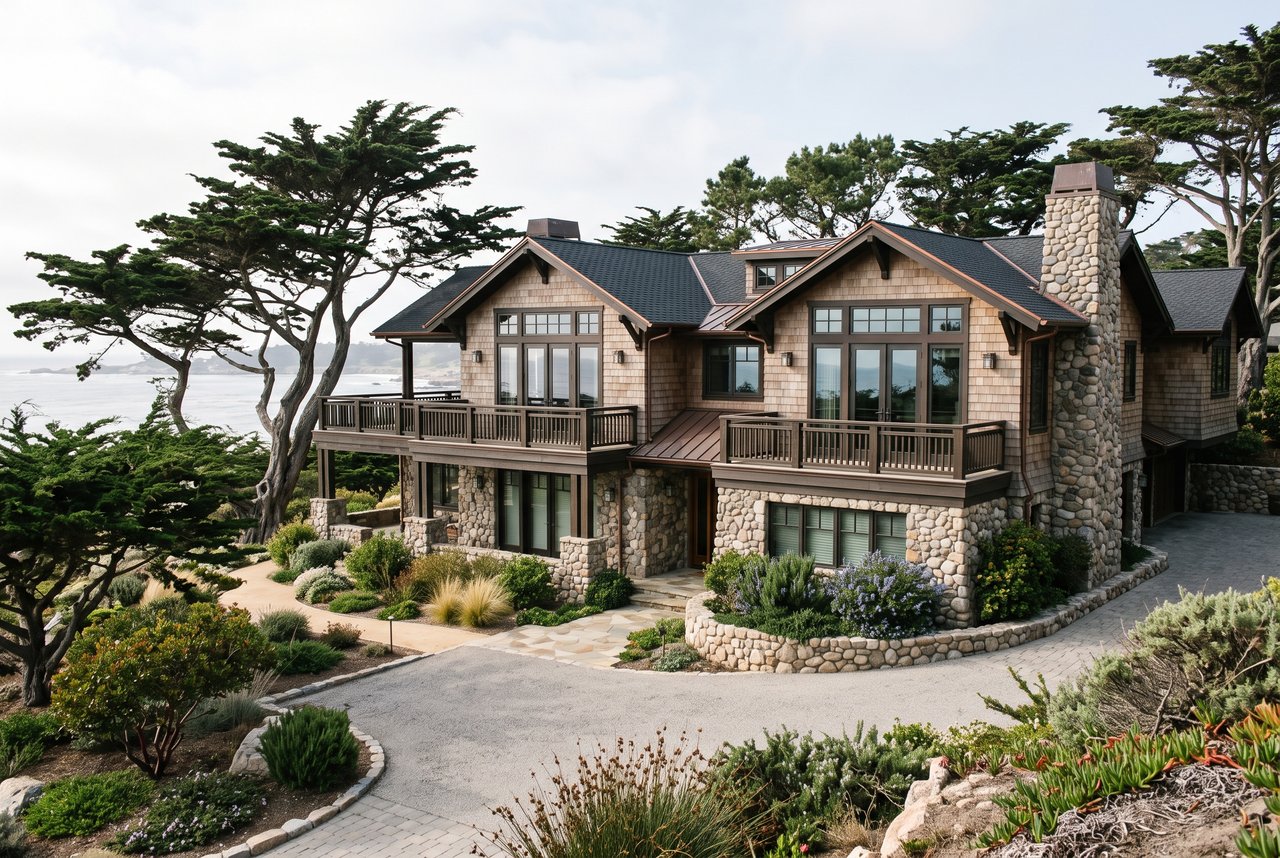
Buying a Second Home on the Monterey Peninsula: What to Know Before You Choose a City
Educational October 13, 2026
Educational October 13, 2026
Post 2 in my series on buying a second home on the Monterey Peninsula. Haven’t read Post 1, “Why People Buy a Second Home on the Monterey Peninsula”? Start there first. About a 9-minute read — real statute citations, permit caps, and dollar figures, all seven cities broken out individually below.
Quick answer: HOAs are a near-certainty in a condo, townhome, or gated community anywhere on the Peninsula, not just Del Monte Forest. Short-term rental rules vary so sharply by city that a rental-income plan is realistic in some places and illegal in others. Your property tax bill resets to your purchase price — Prop 19 doesn’t apply to a true second home. And wildfire insurance has gotten harder and pricier across the Peninsula, often backstopped by the fire-only California FAIR Plan. Details below.
Most detached single-family homes here answer only to standard city zoning — no HOA. The exception: Pebble Beach’s Del Monte Forest, governed by Pebble Beach Company’s CC&Rs (Del Monte Forest Property Owners is the local contact). PBC’s written consent under those CC&Rs is separate from the county’s vacation rental permit, and PBC isn’t granting it — a posture that appears to be hardening, not resolving. Read the CC&Rs as part of your diligence if Pebble Beach is on your list.
That changes with a condo, townhome, PUD, or gated community — the lock-and-leave options many second-home buyers like. Those carry an HOA in any of the seven cities, dues typically $400–$2,500+/month depending on amenities, not location.
Two Carmel-area 55+ communities illustrate the high end: Del Mesa Carmel ($1,241–$2,517/mo, bundling utilities, garbage, exterior maintenance, and a clubhouse/pool/fitness center per the community’s own materials) and Hacienda Carmel ($617–$1,640/mo, covering exterior/in-unit maintenance, garden and security services, and its own clubhouse, fitness center, pool, and shuttle downtown — utilities inclusion unconfirmed). A smaller complex without that amenity level runs well below that range.
Don’t assume “no HOA” outside Del Monte Forest, or a dues figure from another property — get the actual CC&Rs, fee, and coverage for the specific property.
Short-term rental income is harder to execute here than most buyers assume:
The county’s vacation rental ordinances are also mid-litigation, and it’s gotten more layered since this series started: a June 3, 2026 ruling in MCVRA v. County of Monterey (Case No. 24CV004922) struck down the corporate/out-of-state ownership ban and the “homestay” primary-residence requirement, but the caps and use-permit framework survived. Then, on July 29, 2026, the same plaintiff group filed a second suit — this time against the California Coastal Commission as well as the county — challenging the Coastal Commission’s August 2025 approval of the county’s coastal-zone vacation rental rules, on the theory that the approved version still contains ownership restrictions the Superior Court had already struck down. That second suit was still pending as of this update. The county’s own vacation rental page, current as of this research, confirms the 118/201 caps and the Carmel Valley residential exclusion are still in force and explicitly says it “cannot predict” whether the ordinances will need to change depending on how the litigation resolves. Confirm current status before counting on a specific path — this is genuinely still moving.
California reassesses a property to fair market value on the date ownership changes — Proposition 13’s core mechanic (per the BOE’s own FAQ). Your new assessed value is based on what you pay, not the seller’s prior assessment; annual increases after that are capped, so the bill grows slowly from your purchase-year baseline.
Prop 19’s tax-base transfer does not apply to a second home. It lets homeowners 55+, severely disabled, or disaster victims carry their tax base to a replacement principal residence — the BOE’s fact sheet requires the claimant to occupy the replacement property as a principal residence, qualifying for the homeowners’ exemption. A vacation home never qualifies.
Don’t budget off the listing’s advertised tax figure — it reflects the seller’s often much older, lower assessment. Get your own estimate based on purchase price.
(General information, not tax advice — confirm specifics with a tax professional or the Monterey County Assessor.)
This is a statewide story. State Farm, California’s largest home insurer, requested a 22% emergency rate increase in early 2025; the rate that took effect (June 2025, made permanent via a March 2026 CDI settlement) was 17%.
For a buyer: the seller might already have a non-renewal notice — it’s common for a seller’s carrier (Farmers is one I see often) to have declined to renew, or the seller to already be on the FAIR Plan. Separately, standard carriers increasingly won’t write you a new fire policy at all. Either way, you can end up needing the FAIR Plan — a pool all California-licensed insurers must fund, established in 1968 after the 1960s riots and brush fires. It only covers fire; for water damage, theft, and liability you need a separate Difference in Conditions (DIC) policy too — the CDI’s fact sheet notes only about half of FAIR Plan policyholders carry one.
Pricing hinges on the specific parcel — distance to the nearest fire station/hydrant, defensible space, roofing/siding materials, vegetation, slope — so I can’t ballpark a number from the neighborhood alone. Two houses a block apart can get very different quotes.
The risk is more spread out than “coastal safe, inland risky.” Under CAL FIRE’s 2025 maps: Monterey’s Very High zone grew to 1,220 acres (from 1,106), plus new High (1,020) and Moderate (511) categories that didn’t exist before. Pacific Grove grew from about 82 Very-High acres to roughly 372 across all tiers (adopted June 18, 2025). Carmel grew to about 278 Very High acres from 221 (per Monterey County Now — the one figure here not confirmed against a primary source). Carmel Valley, Pebble Beach, and Carmel Highlands remain flagged for elevated risk from dense tree cover and steep terrain. Marina’s acreage couldn’t be verified after several attempts — check CAL FIRE’s viewer directly.
Check the specific parcel on CAL FIRE’s address-level viewer before writing an offer, get an actual quote, and ask your insurer how occupancy (full-time vs. second home) affects underwriting — the state’s temporary protections against insurers dropping wildfire-area coverage are explicitly not permanent.
“AB 38” is actually two separate requirements, and the second is the one that can cost real money.
1. Home-hardening disclosure (Civil Code §1102.6f): for homes built before January 1, 2010 in a High or Very High zone, the seller must disclose vulnerable features — exposed roof vents, wood shingles, combustible landscaping within five feet of the structure, single-pane windows, uncovered gutters — plus, since a July 2025 addition, which items from the State Fire Marshal’s retrofit list have been completed. Homes from 2010 on are exempt (Chapter 7A wildland-urban interface code was already mandatory). Pure disclosure — no work required first.
2. Defensible-space compliance documentation (Civil Code §1102.19, Government Code §51182, Public Resources Code §4291): this involves an actual inspection. The seller must document a passed inspection within six months of the sales contract — vegetation clearance up to 100 feet where the parcel allows it, no limbs within 10 feet of a chimney, no dead/dying growth overhanging the structure, a roof clear of debris, among other specifics. Deficiencies generate a corrective report — trimming, brush clearance, gutter cleanout — that costs real money, which is why this can become a negotiation item in escrow. If the seller can’t get compliant documentation before closing, that obligation transfers to the buyer in writing, with a one-year post-closing deadline.
Several Peninsula fire departments run their own inspection programs — Monterey charges $321 per inspection (July 1, 2026 fee schedule), same six-month timing. Confirm the process and fee with whichever fire agency covers the property.
Separately, the standard Natural Hazard Disclosure statement requires High/Very High zone status be disclosed regardless of the home’s age. In a higher-risk zone (check Marina against CAL FIRE’s viewer, since I couldn’t verify its acreage), ask for both documents, and raise the defensible-space piece early enough to negotiate any corrective work.
(General information, not legal advice — a real estate attorney can confirm how this applies to a specific property.)
A second home you’re not in year-round needs a plan for when you’re away. Mail is the easy part — most owners just forward it to their primary address. The logistics that actually matter are the ones that affect the property itself while nobody’s watching it.
Property management is worth seriously considering, even if you have no rental ambitions at all. A property manager — or a narrower, cheaper home-watch service if that’s all you need — handles routine walkthroughs, coordinates with vendors when something breaks, and catches a small problem (a slow leak, a failed sump pump, storm damage, a dead landscaping irrigation line) before it turns into an expensive one discovered three months later on your next visit. For an owner who’s only on the Peninsula occasionally, this is usually the single highest-value piece of owning from a distance.
If you’re in a fire-exposed area and not visiting often, fire-hardening and defensible space upkeep deserve ongoing attention, not a one-time fix. The defensible-space clearance that passed an AB 38 inspection at closing doesn’t maintain itself — vegetation grows back, gutters refill with debris, and the home-hardening features covered earlier (vents, roofing, landscaping clearance) only help if they’re kept up. If you’re not there to notice it slipping, build this into whatever property management or landscaping arrangement you set up, and confirm whoever you hire actually understands defensible-space requirements rather than just general yard work.
A few more logistics worth setting up before you close, not after:
Each city post later in this series localizes this further, since what “owning from a distance” means in walkable Carmel-by-the-Sea is different from a larger, more remote Carmel Valley property.
Does every Peninsula city have an HOA I need to worry about?
Depends on property type, not city — most detached homes don’t have one (except Del Monte Forest), but condos, townhomes, PUDs, and gated communities almost always do, $400–$2,500+/month.
Which cities currently allow short-term rental income on a true second home?
Realistically, unincorporated Carmel and Carmel Valley’s non-residential parcels under the county’s capped ordinance. Carmel-by-the-Sea and Monterey are closed in residential zones; Marina requires primary residence; Pacific Grove allows it in Coastal/Commercial zones under Measure M and a 250-license cap (84 licenses were shown as active on the city’s page at last check, undated, so confirm the current count) but spacing rules limit availability regardless; Pebble Beach has no path right now.
Are my property taxes based on the seller’s tax bill, or can I transfer my tax base under Prop 19?
Neither — California reassesses to your purchase price as of the ownership-change date, and Prop 19’s transfer requires the replacement property to be your principal residence, which a vacation home never is.
Is wildfire insurance a concern everywhere, or just certain areas?
Wider than a coastal-vs-inland split suggests — Very High zone acreage grew under the 2025 maps in Monterey, Carmel, and Pacific Grove too. Check CAL FIRE’s viewer and get a specific quote.
What is the California FAIR Plan, and when would I need it?
A fire-only insurance pool all California-licensed insurers must fund, created in 1968 as a last resort — needed if the seller’s carrier declined to renew, or a new carrier won’t write you a policy. It excludes water damage, theft, and liability; pair it with a DIC policy for that.
What is AB 38, and does it apply here?
Two requirements: a home-hardening disclosure for pre-2010 homes in a High/Very High zone (§1102.6f), and defensible-space compliance documentation regardless of build date (§1102.19) — a passed inspection within six months of the sales contract, or the obligation transfers to the buyer with a one-year deadline.
This post covers general California and Monterey Peninsula facts current as of publication (September 23, 2026) — not individualized tax, insurance, or legal advice; confirm specifics with the Monterey County Assessor, a licensed insurance agent, or Pebble Beach Company/Del Monte Forest Property Owners before deciding. Questions about a specific property or city? I’m at [email protected] or 831-601-1370.
Educational
HOA realities, how short-term rental rules actually differ city by city, property tax reassessment, and wildfire insurance and AB 38 — the groundwork that applies no m… Read more

Educational
Twenty years of working with these buyers points to six recurring patterns — and by the time most of them call an agent, they already know which city, and sometimes wh… Read more
I combine local market expertise, strategic guidance, and dedicated service to help you make informed decisions and achieve successful outcomes.
BAY HOMES & ESTATES
719 LIGHTHOUSE AVE PACIFIC GROVE, CA 93950 Ottmar, Benjamin David | CA DRE# 01503930 Frangella, James Michael | CA DRE# 01062212