Marina's Real Weekend Currency Is Wind, Not Water
September 3, 2026
September 3, 2026
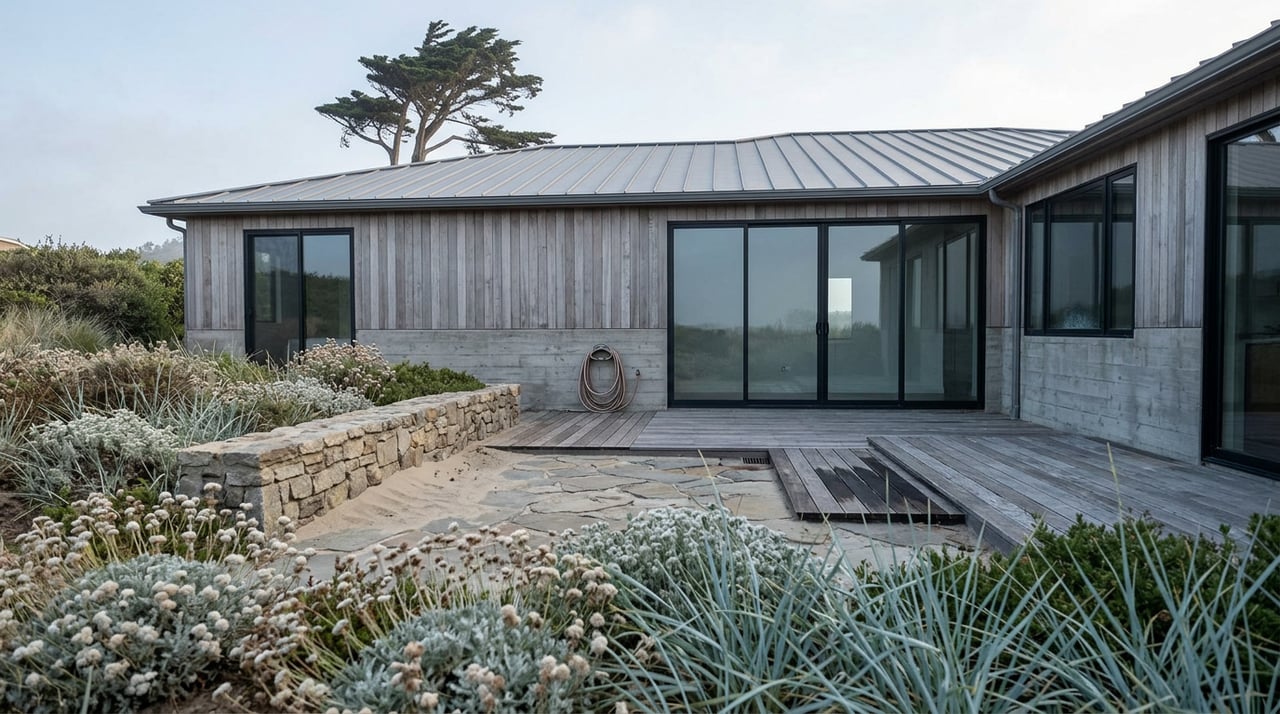
Saturday morning at the foot of Reservation Road, the parking lot at Marina State Beach fills before most of the Peninsula has finished its coffee. Nobody unloads a surfboard. Nobody wades in past their ankles. What comes out of the trucks are wings, harnesses, and windsocks, because the people who show up here already know what the state park sign spells out in plain language: this stretch of Monterey Bay is not a swimming beach.
That single fact, more than any postcard description of dunes or fog, is the thing that actually organizes life in Marina on the weekend. Water recreation here is officially discouraged because of strong rip currents and steep drop-offs, and residents built an entire recreational culture around that warning instead of ignoring it. The result is a town where the weekend calendar runs on wind, altitude, and dry sand rather than tide charts, and where the businesses and clubs that have grown up around that fact are older and more structured than most newcomers assume.
Drive ten miles north from Monterey and Marina State Beach looks, at first glance, like every other stretch of Monterey Bay coastline. It isn't. The same conditions that make swimming dangerous, strong onshore winds and tall, steep dunes, make the site one of the better dune-soaring locations on the California coast. Locals don't treat the rip current warning as a disappointment. They treat it as the reason the place works for what it actually does.
That distinction matters if you're new to the neighborhood and still calibrating expectations. A beach day in Pacific Grove or Carmel means a blanket and a swimsuit. A beach day in Marina means checking wind direction before checking the tide.
The wind culture here isn't casual, and it isn't recent. The Coastal Condors Hang Gliding and Paragliding Club has maintained coastal free flight at these dunes since 1974, which means the sport predates most of the housing stock in the surrounding neighborhoods. Access to the site is a managed privilege, not a free-for-all. Pilots need a minimum P3 or H3 rating, they sign in before flying, and they operate inside a USHPA-approved risk mitigation plan built specifically for Marina.
The rules read almost like a local ordinance. Ideal wind direction sits between 270 and 290 degrees. Hang gliders need 12 to 25 mph of wind, paragliders need 10 to 18. Certain dune faces are marked off limits entirely to protect nesting Western Snowy Plovers, and pilots who land off course have exactly two approved dunes where they're allowed to relaunch. None of this is decoration. It's the reason the site has stayed open and flyable for over five decades instead of getting fenced off after erosion or a habitat conflict, and it's why the sky over the dunes on a breezy Saturday looks less like a spontaneous hobby and more like a long-running civic arrangement between pilots, the state park, and a very specific patch of shorebird habitat.
A few hundred yards inland, the same appetite for altitude shows up in a completely different form. Skydive Monterey Bay operates out of Marina Municipal Airport and markets itself on the height of its jumps, tandem flights from 18,000 feet, which the operator describes as the world's highest tandem jump program. The math on that is worth sitting with for a second: a 90-second free fall followed by six to eight minutes coasting under canopy before landing back at the airport.
Where the Coastal Condors depend entirely on wind that shows up or doesn't, Skydive Monterey Bay runs on a schedule, because a plane doesn't need the dunes to cooperate. The two activities sit less than a mile apart and solve the same local craving, height and open air over the bay, through opposite mechanisms. One is unpowered and wind-dependent. The other is powered and available whenever the aircraft is.
Not every Marina weekend involves leaving the ground. Disc golf here runs almost entirely through California State University Monterey Bay, which hosts two separate courses on campus. The Cypress Course is the beginner option, an eight-hole loop that shares terrain with the university's fuller 27-hole layout, and it's free to play beyond a five-dollar parking fee on campus (park off campus and walk in, and even that goes away).
According to UDisc's course directory, Marina ranks as the 40th best disc golf city in California with just two courses and four active leagues. For a city Marina's size, that's a meaningful concentration, and it's concentrated for a specific reason: both courses live on one campus, so the sport's local footprint tracks the university's footprint almost exactly. Ask a longtime resident where to throw a round and the answer isn't a scattered list of city parks. It's CSUMB, full stop.
Not everything about Marina's outdoor calendar is airborne or athletic. Marina Dunes Preserve, tucked south of the main state beach access, draws a smaller and quieter crowd precisely because reaching it means a slog through soft sand along a roped-off dune trail. Leashed dogs are welcome on the beach itself, which makes it the default choice for residents who want a walk with their dog rather than a look at a paraglider.
That's a real point of difference from Fort Ord Dunes State Park a few miles south, where four miles of paved beach and bluff-top trail wind past interpretive panels on the area's military history. Dogs are allowed there too, but only on the paved roads. They're kept off the sand and the unpaved dune trails entirely, a restriction tied directly to protecting Snowy Plover nesting sites. If you're picking a weekend walk based on whether your dog can actually get sand between its paws, Marina Dunes Preserve is the answer. If you want distance, pavement, and a longer stretch of shoreline, Fort Ord Dunes is the better fit, leash and paved-path rules included.
Every activity on this list ends somewhere with a counter and a menu, and as of this year that somewhere has a new option. On Thursday, February 19, 2026, the Moncada family opened a third location of El Charrito on the Marina Promenade of the Dunes, open daily from 7:30 a.m. to 6 p.m. The tortillas still come from the original Salinas kitchen, where a third generation of the family has kept grandmother Teresa Moncada's recipes intact since she opened the first location 44 years ago. The family already runs a second location and the higher-end Alejandro's in Monterey, opened in 2022, but the Marina outpost puts that same food a few minutes from the dunes instead of a twenty-minute drive away.
For a neighborhood built around morning wind sessions and afternoon dune walks, having that food source land inside the same zip code changes the shape of a Saturday. It's not a coincidence that a family business built on consistency chose this stretch of Marina for its third expansion. The dune crowd here is steady, and steady crowds support businesses that stay open on the same schedule week after week.
None of this reads like a typical beach town weekend, and that's the point. Marina didn't get its outdoor identity by ignoring what the ocean does here. It got there by listening to the rip current warning and building everything else around it: a fifty-two-year-old flying club with its own risk mitigation plan, a skydiving operation that trades wind dependency for altitude, two disc golf courses that live entirely inside one university, and a dog beach that exists specifically because the state park a few miles south won't let dogs off the pavement. Add a new taco counter with a 44-year-old recipe behind it, and the picture of a Marina Saturday looks nothing like the version most people picture when they hear "Monterey Bay beach town."
If you're weighing what a neighborhood like this means for your own plans on the Peninsula, whether that's a second home near the coast or a move that puts you closer to mornings like these, Ben Ottmar has spent his career inside these exact micro-markets and can walk you through what a place like Marina actually offers day to day, not just on paper. Get in touch when you're ready to talk specifics.
Educational
Twenty years of working with these buyers points to six recurring patterns — and by the time most of them call an agent, they already know which city, and sometimes wh… Read more

Educational
A dated, sourced look at the September–November 2026 events calendar and current mortgage rates, and what the fall season typically means for Peninsula buyers and sell… Read more
Coastal Events
A Local's Guide to 75 Years of Automotive History, the 2026 Event Lineup, and What It Means for Peninsula Real Estate
I combine local market expertise, strategic guidance, and dedicated service to help you make informed decisions and achieve successful outcomes.
BAY HOMES & ESTATES
719 LIGHTHOUSE AVE PACIFIC GROVE, CA 93950 Ottmar, Benjamin David | CA DRE# 01503930 Frangella, James Michael | CA DRE# 01062212